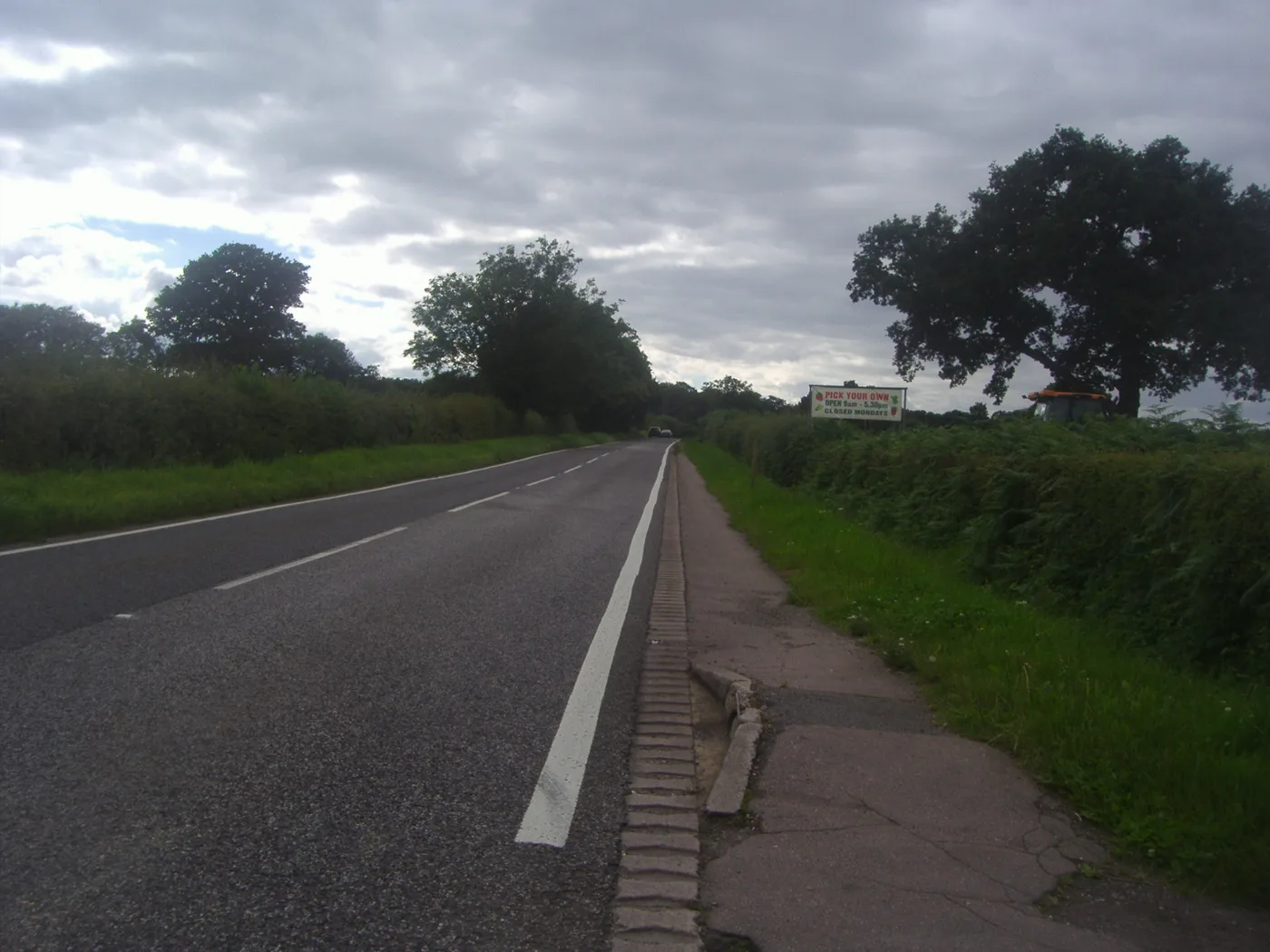

Cabinet agreed to sell 54.77 hectares of Enfield Chase farmland without putting it on the open market. Ministers and the Duchy of Lancaster must both consent.
Enfield Council has agreed to sell 54.77 hectares, or 135.37 acres, of green belt farmland at Enfield Chase. The buyers are not named in any public document. The land was never advertised for sale.
Cabinet took the decision on 9 September under key decision KD 6120, in Ridgeway ward. The land sits south of The Ridgeway and north of Hadley Road, and the report says its only adopted planning designation is Green Belt. (Enfield Council, Cabinet agenda and decisions, 9 September 2026)
It is a swap, and the council ends up with more land
The sale is one half of a deal. The fields are let to a tenant farmer under the Agricultural Holdings Act, which gives the tenant strong security and, in the council’s words, “physically and legally restricts” what the council can do with the land.
To get that control, the council is selling part of the holding so the tenant can carry on farming elsewhere, and taking the rest back:
- 54.775 hectares (135.37 acres) sold to the buyers
- 146.85 hectares (362.89 acres) surrendered back to the council
- The wider Enfield Chase Landscape Recovery Scheme covers about 1,500 hectares of farmland and parkland in the north west of the borough
So the council gains control of nearly three times as much land as it gives up. That is the case the report makes, and it is a fair one. What follows is the part that has had no public airing.
No open marketing, and a joint valuation
The report is explicit that “the sale has not been based on an open marketing exercise”. It was handled under the council’s Property Procedure Rule 15, which allows an off-market disposal where an open sale “would not achieve the best consideration reasonably obtainable”.
The valuation that sets the price was produced by Bidwells, the chartered surveyors, who were jointly instructed by the council and the buyers. The price, the valuation and the buyers’ identities are all in a Part 2 confidential appendix, withheld under the Local Government Act 1972 as information about a person’s financial or business affairs.
The sale plans showing exactly which fields are going were listed as appendices to the report. They were not published with it.
Ministers, the Duchy of Lancaster, and how to object
This is green belt land protected by the Green Belt (London and Home Counties) Act 1938, and selling it is not in the council’s gift. Before anything completes, the report says the council must:
- apply to the Ministry of Housing, Communities and Local Government for consent to sell and to release the covenants imposed by a 1938 Deed of Declaration
- obtain the written consent of the Duchy of Lancaster, which holds covenants requiring the land to be used only as open space, recreation and pleasure grounds, sports grounds, public walks, playing fields or for physical training
- serve notice on Hertfordshire County Council and seek its consent
- publish notice of the proposed sale in a local newspaper, and consider any objections made
If Hertfordshire County Council refuses consent, the report says the ministry convenes a local public inquiry under section 5(3) of the 1938 Act. Separately, because part of the site may count as open space, section 123(2A) of the Local Government Act 1972 requires the council to advertise its intention to sell in two consecutive weeks and to consider objections.
That newspaper notice is the moment residents get a formal say. No date for it has been published.
One more detail worth knowing: under section 25 of the 1938 Act, the ministry can make it a condition of consent that the council spends the money, or part of it, on other parts of the green belt in Enfield or Hertfordshire.
The council’s case, and the line in its own report
The council argues the deal makes the green belt better, not worse. Its report says the reconfigured land will increase “the overall openness of the Green Belt”, strengthen ecological connectivity, and be “more defensible” as green belt. It leans on paragraph 140 of the National Planning Policy Framework, which allows green belt change in exceptional circumstances.
The environmental purpose is real and specific. Control of the land is what allows the watercourses to be re-naturalised: meandering channels, flood storage, wetlands and riparian woodland, joined up across the catchment. The report says this matters for “reducing downstream flood risk in Enfield Town and the broader Salmons Brook corridor”, and that without releasing the land, the flood management objectives “cannot be fully achieved”.
Then there is paragraph 42, in the report’s environmental implications section. It says the land is currently agricultural land and designated green belt, and that “any development of the land that the buyers or future parties implement will result in significant embodied and operational carbon emissions”. Those emissions, it adds, “cannot be avoided but should be mitigated by compliance to the latest planning policies and best practice”.
The council’s own report therefore anticipates that the buyers, or whoever owns the land after them, may develop it. Nothing in the public papers says what the buyers intend, because the public papers do not say who they are.
The money
The report frames the sale as funding as well as land assembly. The Landscape Recovery scheme has, it says, “confirmed DEFRA funding of £38m”, and the sale generates a capital receipt “supporting the Council’s financial strategy”. The council’s capital strategy targets £90m of capital receipts by 2033/34.
There are overage clauses, meaning the council can receive an extra payment later, including on the land subject to the Duchy’s covenants, where the report says negotiations with the Duchy are still going on. The council will lose the rent from the fields but also sheds its maintenance liability under the tenancy. Every one of those figures is in the confidential appendix.
What the scheme is
The Enfield Chase Landscape Recovery Scheme was approved by Cabinet on 14 January 2026 under key decision KD 5925, affecting Cockfosters, Ridgeway and Whitewebbs wards. That report calls it “the largest rewilding project in London”: roughly 1,500 hectares, a minimum 20-year funding agreement with Defra, with Enfield Council itself acting as the accountable body. (Enfield Council, Enfield Chase Landscape Recovery Project report, January 2026)
The January report set out two costed options. The “Ambition Case”, the one recommended, was costed at £39.7m of capital spending over 20 years, with total income of £78.51m and outflows of £76.9m. It also said the council would have freehold ownership of 98% of the land under that case, and that the project “keeps land in public ownership”.
The same January report, at recommendation VIII, told councillors to note that “any disposal of Green belt and/or open space may be subject to approval by Cabinet and would be subject to public advertisement and Secretary of State consent”. Eight months later, that disposal is the decision Cabinet has just taken.
What it means for you
If you walk, ride or run on Enfield Chase, nothing changes on the ground yet. Public access is one of the scheme’s stated aims, and the council says the restored land will be reachable through new footpaths and cycleways. The 54.77 hectares being sold are not part of that restoration.
If you live downstream in Enfield Town or along Salmons Brook, this is a flood story. The council’s argument for the whole deal rests on being able to reshape the watercourses upstream, and its report says that cannot be done at scale while the land is fragmented.
If you want to object, watch for the statutory notice in a local newspaper. That is the formal route, and objections go to the ministry, which must consider them before giving consent. You can also read the full report yourself: the Cabinet paper is public, even though its appendices are not.
If you are following planning in the borough, our Enfield planning news page tracks the applications and decisions as they land.
We will report the newspaper notice when it appears, and the ministry’s decision when it comes.
Sources
Have your say