
Enfield Council could break its £997m borrowing cap if £76m of land sales fall short, its treasury report warns. It also wants to buy 50 homes outright.
Enfield Council could break its own limit on borrowing if this year’s land and property sales fall short. The warning is in the council’s half-year treasury report, which Cabinet noted on Wednesday 4 November. (Enfield Council, 2026/27 Quarter 2 Treasury Monitoring Report, KD 6140)
Full council set the cap in February 2026. It limits the general fund’s underlying borrowing, the debt behind everyday council services rather than council housing, to £997 million.
The report expects that figure to be £944.8 million on 31 March 2027. But that depends on the council selling £76 million of land and buildings this year, including at Meridian Water. If the sales are delayed or fall well short, the council would have to borrow more. The report says the cap “could be breached”, with higher borrowing costs from 2027/28. It adds that “mitigations are being deployed” to stop that happening.
Cabinet’s decision sheet, published on 6 November, records that it noted the risk. (Enfield Council, Cabinet decision sheet, 4 November 2026)
How much the council owes
The council’s total external debt was £1.290 billion on 31 March 2026. Repayments brought it down to £1.272 billion by 30 September. The report expects £1.234 billion by the end of March, if the sales targets are met in full.
The main numbers from the report:
- £29.3 million: what debt is expected to cost the general fund this year, in interest, other charges and money set aside to repay loans. That is £3 million less than the £32.3 million budgeted in February.
- 3.2%: the average interest rate on all the council’s debt, unchanged since April.
- 5.4%: the rate the council now expects to pay on any new general fund borrowing. That is half a percentage point more than the budget assumed.
- £127 million: cash invested on 30 September, earning an average of 4.3%. Investment income is forecast at £4.9 million, against a budget of £3.7 million.
The report says borrowing remains within the limits full council approved. The legal maximum for all council debt this year, including PFI and lease deals, is £1.908 billion.
Our report on the half-year budget found services £11.2 million over budget. That gap is also partly being closed with money from property sales.
Buying homes for temporary accommodation
The report proposes a change in how the council finds homes for households in temporary accommodation.
Its budget for 2026/27 includes £185.3 million to take on homes through long leases. The report says those leases have been hard to secure. An early appraisal found that buying up to 50 homes outright would cost the general fund less than leasing them.
Cabinet has asked full council to let it move up to £40 million from the leases budget to buying homes. A detailed report to Cabinet would follow before any purchase.
Buying the homes would add to the general fund’s borrowing and bring it “closer to the £997m limit”, the report says. But the council’s debt strategy allows projects that cut day-to-day costs by more than their borrowing costs to sit outside the cap, once Cabinet has scrutinised them.
Who owes the council money
The report also lists money owed to the council.
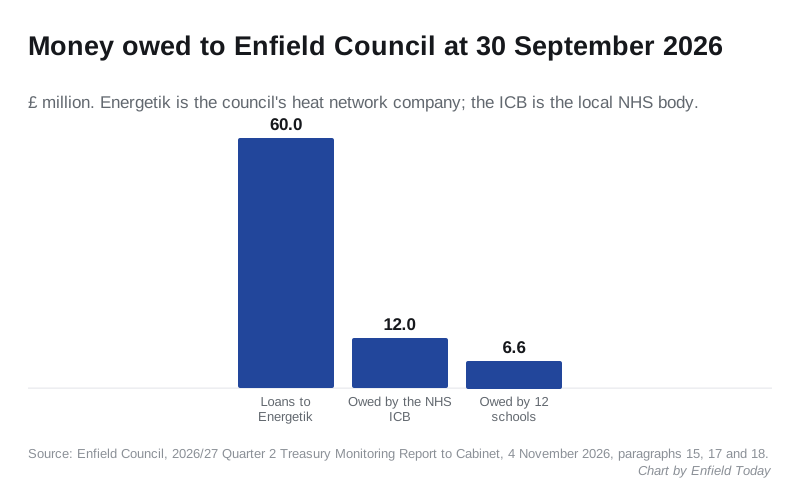
- Energetik, the council’s heat network company, owes £60.0 million in loans. That is up from £56.1 million in April, after £4.2 million more was lent and £0.3 million repaid.
- The NHS integrated care board owed the council £12 million on 30 September. The report gives it as an example of unpaid debts affecting the council’s cash.
- Twelve schools owe a total of £6.6 million, down from £6.9 million in March. The report does not name them.
What full council is asked to approve
Full council meets on Wednesday 11 November. Cabinet has asked it to approve:
- spending £1.4 million of this year’s expected sales money on preparing land for sale, including getting vacant possession
- the power for Cabinet to move up to £40 million from leasing homes to buying them
- raising the share of its debt that can fall due for repayment by the end of 2035/36 from 50% to 55%, to give “flexibility for additional borrowing should the need arise”
- a change to its limits on lending cash to other local authorities, which the report says is to “maximise returns whilst maintaining security and liquidity”
What it means for you
For council tax payers, nothing changes this year. Debt costs are slightly under budget, and higher interest on the council’s cash is helping. The risk is to next year’s budget: if the sales slip, borrowing costs rise from 2027/28, when the council sets its budget in February.
If you are in temporary accommodation, or waiting for it, the plan to buy homes is not yet approved. Cabinet would decide each purchase programme in a later report.
If you want to follow it, full council meets at 7pm on Wednesday 11 November in the Council Chamber. The agenda is on the council’s meetings site.
Have your say